
Art becomes the invisible yet essential ingredient that transforms ordinary spaces into extraordinary experiences. When mural art meets hospitality, a sensory dialogue emerges that elevates every aspect of a guest’s journey. As Leon Battista Alberti, quoted by mural art master Giliana Gavioli, states: “decoration is a means to beautify the architecture that houses it.” Similarly, the environment serves as a stage that enhances not only culinary offerings but the entire hospitality experience, creating a complete sensory journey that guests remember long after their stay.
Giliana Gavioli’s philosophy -“decorating walls brings them alive, gives them a soul, infuses them with deeper meaning”- reveals how vital decorative art is in creating memorable hospitality experiences. In HORECA contexts, this approach creates environments that tell stories and guide guests through a richer experiential journey, whether they’re dining, relaxing in a lounge, or retreating to their accommodations.
Decorative art and neuroaesthetics
Hospitality, like decorative art, is rooted in centuries-old traditions that evolve through technical and creative innovations. Gavioli perfectly embodies this duality: she respects and restores the past while innovating with patented technologies that overcome traditional limitations of mural decoration—much like how modern hospitality honors tradition while embracing contemporary approaches to enhance guest experiences.
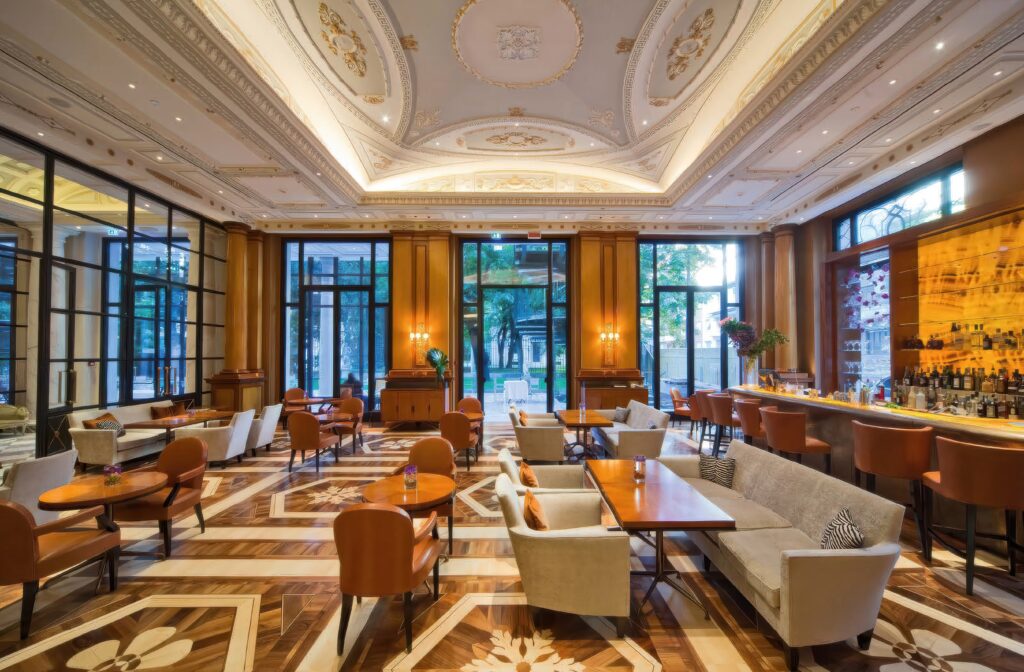
Consider Thornbury Castle in England and Palazzo Parigi in Milan, where Gavioli’s artistic interventions have created immersive environments. Here, the decor communicates the values, history, and culture that enrich every moment of a guest’s stay, from the grandeur of reception areas to the intimacy of dining spaces, transforming a simple stay into a memorable cultural experience.
Consider Thornbury Castle in England and Palazzo Parigi in Milan, where Gavioli’s artistic interventions have created immersive environments. Here, the decor communicates the values, history, and culture that enrich every moment of a guest’s stay, from the grandeur of reception areas to the intimacy of dining spaces, transforming a simple stay into a memorable cultural experience.
Neuroaesthetics confirms what Gavioli intuitively knows: environment profoundly influences sensory perception and emotional responses. Research shows that identical experiences—whether tasting wine, enjoying a spa treatment, or simply relaxing in a hotel lounge—are perceived differently depending on the surroundings. This phenomenon extends to every aspect of hospitality—services delivered in a harmonious, aesthetically pleasing environment are consistently rated more satisfying than identical offerings in visually uninspiring spaces.
Gavioli’s latest innovation—a collection for HORECA clients seeking sustainable ways to implement valuable, handmade decorations—reflects a trend increasingly essential across the hospitality industry. Sustainability is no longer just an added value but a core expectation from guests who seek authentic experiences that respect both cultural traditions and environmental responsibility.
The synergy between decorative art and hospitality reminds us that a stay is not merely a transaction but a total cultural experience where all senses participate. The skillfully art-decorated environment becomes an invisible yet powerful ingredient that enhances every aspect of guest satisfaction—from the first impression at check-in to the ambiance during meals, from relaxing in common areas to enjoying the comfort of private spaces—stimulating positive emotions and creating lasting memories that inspire return visits.
[note: this article was featured on HORECA Magazine in April 2025]